The Modern Surge: Why Crochet Jewellery is Becoming the Preferred Choice
From festive wear to contemporary office styling, the modern Indian woman is shifting away from heavy, traditional metals toward something more expressive, lightweight, and sustainable. Enter crochet jewellery—a beautiful fusion of vintage craftsmanship and modern bohemian chic. The Indian consumer's mindset is evolving, and crochet jewellery perfectly aligns with this shift for several key reasons:
Unmatched Comfort & Weightlessness: Traditional Indian statement jewellery—like Kundan or oxidized silver—can be heavy and uncomfortable for long hours. Crochet jewellery offers the same dramatic, head-turning scale but feels practically weightless, making it perfect for all-day wear.
The Shift to Sustainable Fashion: With a growing consciousness around eco-friendly living in India, consumers are ditching plastic-based fast fashion. Crochet pieces, typically made from 100% cotton threads or organic yarns, offer a zero-waste, biodegradable alternative.
Versatility in Styling: Whether it’s a pair of vibrant, multi-coloured jhumkas paired with a handloom cotton saree, or a neutral, delicate choker styled with a white linen shirt, crochet bridges the gap between traditional ethnic and contemporary western styles flawlessly.
Affordable Luxury and Customization: It provides a luxury, boutique feel without the hefty price tag of precious metals. Because it is handmade, it allows for endless customization in colors, sizes, and stone embeddings to match specific outfits.
The Cultural Importance: Empowering Artisans and Preserving Craft
In the Indian context, crochet jewellery is much more than just a passing fashion fad. It holds deep socio-economic value:
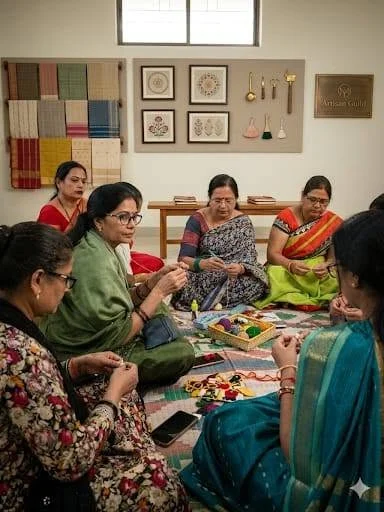
Women’s Economic Empowerment: Crochet is a craft that can be practiced from the comfort of one's home. Across rural and semi-urban India, self-help groups (SHGs) and small indie brands are training women in crochet, providing them with financial independence and flexible livelihoods.
Celebrating the "Handmade in India" Spirit: India has a rich history of celebrating the imperfections and uniqueness of handloom and handicraft. Crochet jewellery honors this ethos—no two hand-knitted pieces are exactly identical, making every earring or necklace a unique work of art.
A Canvas for Fusion: Indian designers are innovating by blending crochet with traditional elements. It is common to see crochet earrings adorned with brass motifs, ghungroos (tiny bells), mirrors, or pearls, beautifully reimagining traditional Indian motifs through a global craft technique.
The Historical Significance: A Colonial Import Turned Indigenous Art
While crochet is often perceived as a European craft, its journey through Indian history is fascinating:
The Colonial and Missionary Influence: Crochet was introduced to India during the 19th century by Christian missionaries and British colonial settlers. They taught the craft to local women in coastal and southern regions to help them earn a living.
The Lace Town of Andhra Pradesh: The most significant historical hub for this craft in India is Palakollu and the Godavari region of Andhra Pradesh. Local women quickly mastered the art, blending European lace patterns with their own artistic sensibilities. By the early 20th century, Indian crochet lace was being exported worldwide.
An Heirloom Domestic Art: For generations in Indian households, crochet was a domestic skill passed down from grandmothers to granddaughters—mostly seen in tablecloths, doilies, and thali covers. The modern transition of this technique from home decor into wearable, high-fashion jewellery is a testament to the adaptability and survival of the craft.
Conclusion for You
Crochet jewellery is not just a trend; it is a movement that respects the past while embracing the needs of the modern, conscious consumer. It tells a story of survival, colonial transformation, and female empowerment, all while looking effortlessly stunning. For the modern Indian shopper, it’s a way to wear art, support a local artisan, and make a bold style statement without saying a word.
